The year 2025 will likely be remembered as one of consolidation and recalibration for New Zealand’s construction and infrastructure sectors, says HERA chief Dr Troy Coyle, who first looks at where we ended up in 2025 and then in subsequent pages what all this might mean for 2026.
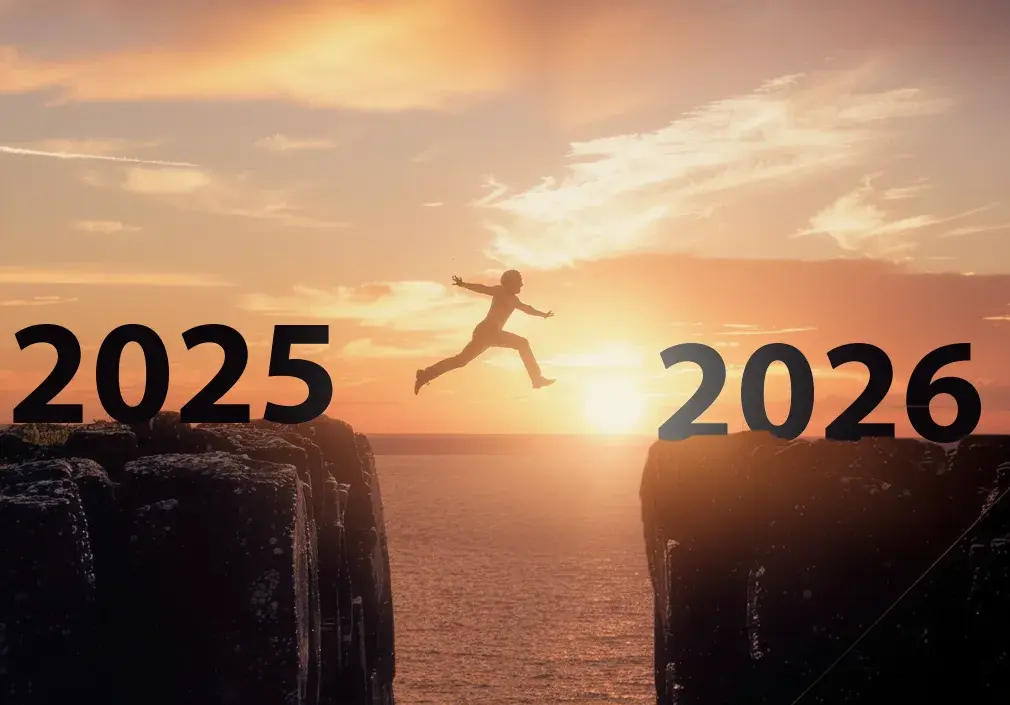
After several years of momentum, the sector found itself confronting a slowdown. Perhaps not a crash, but a palpable easing of activity that exposed the underlying fragilities of an economy in flux, an uncertain policy environment and a workforce stretched between here and Australia.
Quiet pipeline and missing momentum
Government announcements of new, large infrastructure programmes were conspicuously sparse. This lack of a forward pipeline created uncertainty, particularly among engineering consultancies and tier-one contractors who rely on visibility to maintain teams and plan investment.
The impact was compounded by the ripple effect on the professional workforce. As infrastructure delivery slowed, so too did the demand for engineers, planners and project managers.
Firms streamlined their teams, while others sought opportunities across the Tasman where the Australian market was relatively buoyant with record-level public works spending.
Loss of engineers and brain-drain
One of the most alarming signals for the sector was the departure of engineers and technical professionals from New Zealand. The Association of Consulting & Engineering NZ (ACE) informed the NZ Herald that estimates that hundreds of engineering staff were laid off in the last year, and “another 270 have left for overseas”. This was borne out in a survey that HERA undertook of its own members.
More broadly, the outflow of young New Zealanders to Australia and beyond was at a near-record level. This was no surprise, given that Australia offered higher wages and more expansive infrastructure markets, as well as greater employment stability.
Adding to the concern, is that engineering graduates within New Zealand were already lower than demand (by about 2300 graduates). HERA sees this, with the majority of new employees coming from overseas, as well as post-graduate students working on our research projects.
Together, these factors pointed to a significant future workforce risk. if the current lull continued and the next up-cycle begins without re-building the technical base, we will inevitably face both a shortage of projects to keep firms occupied and a shortage of people to deliver when the pipeline re-opens.
The rise of AI and productivity tools
While some industry practitioners still regard advanced digital tools and artificial intelligence (AI) with caution (even just a year ago considering use of AI was thought to be “cheating” or gimmicky), the paradigm has shifted.
AI and automation are increasingly being embraced as productivity enablers in construction and infrastructure. The sector is moving from scepticism to adoption.
For smart firms, this represents an opportunity. In a slower market, investing in tools that make delivery faster, safer and leaner becomes a sensible strategy.
In short: the slowdown catalysed a shift in mindset from putting heads down and building, to re-tooling and digitising for the future. This was a future HERA had already predicted, with our focus on Construction 4.0 research commencing a good five years prior.
Sustainability, Te Ao Māori and resilience
Despite the slower market and some retreat in government programs (particularly the retreat from Building for Climate Change program that would have seen the implementation of carbon reporting and eventual targeting), the sector has maintained a strong focus on sustainability and Te Ao Māori dimensions.
In 2025 HERA launched its Low-Carbon and Circular Design Framework and specific guidance for low-rise commercial buildings, as well as a Guide to Specifying Low-Carbon Steel. There has been significant interest in these publications with the latter now being HERA’s most popular guide.
HERA focused on evolving the sustainability narrative. We focused beyond simply meeting the baseline of “reduce carbon” to increasingly thinking about life-cycle effects, materials reuse, circular economy principles and broader environmental impacts beyond simply carbon.
For example, the concept of “planetary accounting” (see below) is beginning to gain traction in New Zealand industry circles. HERA’s Industry X.0 Innovation Centre was the first building in the world to use planetary accounting to assess its broader environmental impacts.
On the Te Ao Māori front, there is rising recognition of the need for mātauranga Māori with many Tier 1 engineering firms (eg Aurecon, WSP) and industry associations such as Te Ao Rangahau Engineering New Zealand and Te Kāhui Whaihanga NZ Institute of Architects building in-house and sectoral capability.
In other words, even in a subdued market, many organisations are actively advancing sustainability and culturally responsive practices, demonstrating leadership and long-term commitment.
Vocational education workforce development
One of the less visible but deeply significant elements of the sector state was the uncertainty around vocational education, workforce development and the models that underpin skills pipelines.
The ongoing major reform of New Zealand’s vocational education system (for example, the wind-up of Workforce Development Committees and creation of ISMs ) means that the construction-related training pathways were significantly uncertain.
Industry leaders, including HERA, have increasingly flagged that funding, attention and practical industry linkages need focus.
Summary – 2025 in a nutshell
So where does that leave us in 2025? We had a construction sector in lull rather than full flight with a focus on managing through a weak cycle. Key risks included the loss of technical talent and engineers, the lack of new project announcements from government, and the lack of a clear pipeline of work.
On the positive side, the sector was adapting by embracing AI and digitalisation, maintaining sustainability and indigenous-capability focus and preparing for the next phase. However, the fact remained that until the pipeline revives, many firms will be working at less than full capacity, with choices around investment, innovation and workforce development needing to be made deliberately, not by default.
Skills investment needs a firm forward-work pipeline
If 2025 was a year of gearing-up and consolidation, then the years beyond hold both the promise and the risk of a fuller boom, provided the right conditions are in place. The current down-cycle is deeper or more drawn out than many anticipated, so the risk is compounded. One of the issues that looms large is that when the sector booms, will we not have the people available, skilled and willing to deliver.
Workforce development is at a perilous crossroads. The previous boom-bust cycles in construction left sectors short when demand surged. Each successive cycle has failed to learn from the last sufficiently to build stability into the workforce pipeline.
When economic recovery or a new policy approach triggers major infrastructure roll-out, the lag in availability of skilled labour could bite. Engineers leaving the country, younger workers postponing entry, tradespeople switching industries are all consequences.
We need a bilateral approach. As well, government and industry must jointly maintain a clear forward-work pipeline (so firms and workers can plan) and invest in the skills, training and retention pathways today.
Without this, a return to boom will see the same “hand-brake” screeching of the past, with associated understaffed projects, rising costs, delays, and productivity gaps.
The institutional context matters here. The dismantling of the industry-led Workforce Development Councils and the uncertainty in the vocational and trades eco-system mean that the sector is less prepared than it might have been.
We need deliberate investment in vocational training, apprenticeships, trades careers, and pathways that link Māori and Pacific tangata whenua (a growing demographic) into the workforce of tomorrow. From a gender-equity perspective, this moment is also an opportunity.
Role profiles are changing
As digital tools, AI, and design-led construction become more normal, the profile of roles is shifting. There is a chance to build a more inclusive and diverse workforce from the ground up.
The workforce challenge is not just local. Globally, there is an increasing shortage of engineers, digital-capable construction professionals and retrofitting/renewal-focused infrastructure skill sets.
At the same time, the rise of AI/automation means that “traditional” manual tasks will diminish, and value will shift to oversight, data analytics, design-integration, stakeholder engagement, cultural capability and systems thinking.
For New Zealand, this means the risk of losing talent to larger overseas markets is persistent unless the sector builds compelling opportunities. On the flip side, New Zealand firms can position themselves as world-leading by leaning into their comparative advantage: integration of indigenous knowledge, world-class sustainability, biophilic design, circular economy, high-trust delivery models.
If we get this right, the differentiator will be people and service. The human side of infrastructure will ironically become more important: deep cultural competence; lean digital delivery; innovation; collaboration and integrity. The technical capability will become the hygiene factor and the culture and people-capability will become the differentiator.
Pipeline revival and need for stability
When large-scale infrastructure projects begin to flow, whether in transport, health, water, energy resilience or urban renewal, the momentum could be significant.
Some market-intelligence reports suggest that recovery is forecast from 2026-29. However, the key word is “could”. The catch is that simply forecasting growth is not enough.
Unless the pipeline is stable, well communicated and bipartisan, the industry will suffer from stop-start waves. Each election cycle can introduce uncertainty, funding shifts, project delays and cancellations.
In this respect, successive governments have yet to fully learn the lesson of boom-bust infrastructure cycles. What is required is a pipeline strategy that spans government terms, is industry-partnered and gives firms and the workforce confidence.
It also requires joined-up thinking across Government departments, cutting across infrastructure, education and innovation portfolios.

Harnessing AI, Construction 4.0 Productivity leap
The future is not simply “more of the same”. It will require a transformation in how construction is delivered. HERA’s Ngākopa Construction 4.0 research program signals the ambition to develop a “Construction 4.0 toolbox”, integrate Mātauranga Māori, design optimisation (across multiple criteria), and circularity.
Construction 4.0 tools offer the sector the chance to raise productivity significantly. This is particularly important in the New Zealand context, as we have to contend with high costs and relatively small scale. Productivity gains will minimise cost escalation, reduce schedule overruns and keep the local market competitive globally.
It also means that the workforce skillset will change. There are likely to be less purely manual tasks and more tech-enabled oversight, data-analysis, automation supervision and digital interface with built-assets. This further highlights the opportunity (or absolute necessity) to shape workforce development now, so that the workforce of tomorrow is ready.
Digging deeper into the work of HERA: the “Ngākopa Construction 4.0” research agenda has been live for a number of years but is entering a new phase. For example, the Ngākopa Construction 4.0 programme (funded through the MBIE Endeavour fund) will be moving into proof-of-concept toolbox development. This will serve as a way for sectoral participants to engage with Construction 4.0 and envisage how it can apply to their mahi.
Sustainability
That is to say sustainability beyond carbon: planetary accounting, biodiversity and biophilic design. While carbon reduction remains central, the future of infrastructure demands a broader environmental lens.
The concept of planetary accounting is gaining traction. Rather than solely focusing on tonnes of CO₂ emitted, we must account for how construction interacts with biodiversity loss, materials depletion, water cycle disruption, soil health, embodied energy, and ecosystem services.
The industry discussion in New Zealand is beginning to shift in this direction, with HERA leading the way. In parallel, the design movement of biophilic architecture and nature-inspired construction is becoming globally mainstream, and increasingly relevant in New Zealand.
The principle is simple: nature has solved most of our engineering and design challenges (resilience, lightweight structures, materials efficiency, climate-adaptation). The industry should look to biomimicry and nature-based solutions, rather than simply retrofitting old industrial models.
Globally, biomimicry has evolved from a design trend into a foundational philosophy that views nature not as something to be added to buildings, but as something to learn from. Each of the world’s most celebrated examples takes its cues directly from natural systems, not just aesthetically, but functionally.
The Bosco Verticale (“Vertical Forest”) in Milan, for instance, was inspired by the way natural ecosystems regulate climate, filter air, and sustain biodiversity. The architects observed how forests create microclimates, using canopy layers to reduce heat, retain moisture, and absorb pollutants.
They translated that into a built form with two residential towers hosting over 900 trees and thousands of shrubs and plants that act as living air filters, carbon sinks, and sound absorbers. The result is a vertical ecosystem that cools the surrounding area and provides habitat for birds and insects, mimicking the regenerative role of forests in nature.
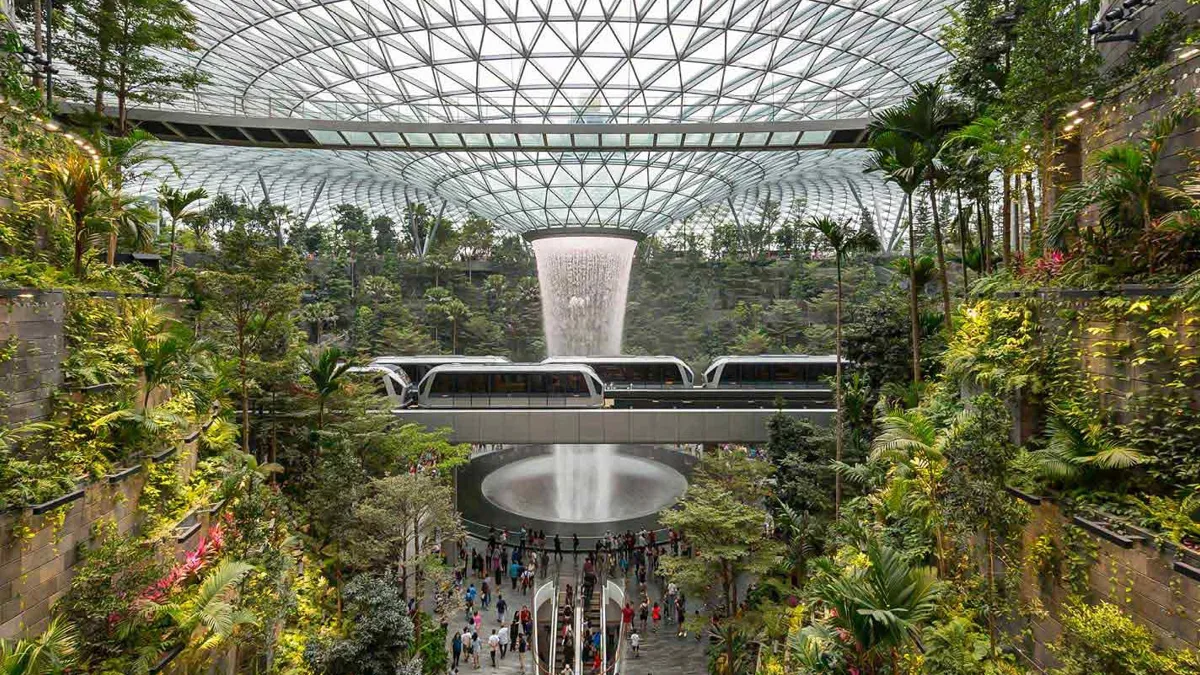
Singapore’s Jewel Changi Airport also takes its design inspiration from the rainforest canopy. The glass-and-steel dome encloses an interior forest crossed by suspended walkways and centred on the world’s tallest indoor waterfall.
This structure replicates the sensory experience of walking through a tropical glade with filtered light, shifting humidity, the scent of vegetation, and the sound of cascading water. It’s not just aesthetic. The waterfall plays an active role in the building’s cooling system, demonstrating how natural hydrological cycles can inform sustainable engineering.
These examples demonstrate that nature offers not only inspiration but instruction. For example, in regulating temperature, managing water, filtering air, and supporting life. As I have often argued, there is no construction problem that has not already been solved in nature. The challenge is to observe and translate those natural strategies into design logic.
For New Zealand, where our built environment co-exists within a landscape of extraordinary ecological and cultural richness, this philosophy has particular resonance. Our firms could be drawing from both nature and mātauranga Māori, recognising that the connection between people and environment (between built form and living systems) is already deeply embedded in our cultural narratives. By bringing biophilic design principles into local housing, public buildings, and infrastructure, we can create places that not only perform better environmentally but also feel inherently like they belong to this land.
Building Trust with Quality, Certification and Assurance
As the sector looks to the future, embracing innovation and sustainability must go hand-in-hand with a renewed focus on quality and compliance assurance. Innovation without trust is fragile, especially in an AI-focused world. As projects become more digitally enabled and complex, incorporating AI, new materials, and sustainability frameworks, the need for verified, third-party assurance becomes even more critical.
This is particularly true in structural engineering and fabrication, where safety, durability, and performance are non-negotiable. Steel Construction NZ’s Steel Fabricator Certification (SFC) provides a model for how independent verification can strengthen both industry capability and public confidence.
The program ensures fabricators meet rigorous standards for competence, traceability, and conformance to national and international codes. This effectively creates a transparent chain of quality assurance from design to delivery.
Such certification schemes are not bureaucratic burdens; they are enablers of trust and competitiveness.
They provide clients, designers, and regulators with assurance that the materials and standard of work behind every structure meets the highest possible standards. In a future where projects will increasingly rely on AI-assisted design verification, modular assembly, and digital twins, third-party certification becomes the human anchor; a trusted benchmark that confirms that innovation has not come at the cost of safety or integrity.
As we integrate AI-driven design verification and compliance tools, something HERA has been pioneering, these systems can and should feed into certified quality pathways. A digitally verified design should lead seamlessly into a physically certified outcome.
In other words, the next frontier of quality is convergence between digital assurance, environmental accountability, and independent certification. The construction sector’s ability to deliver resilient, trusted, and high-performing infrastructure will depend on this integration.
Just as biophilic design learns from the natural systems that sustain life, our regulatory and quality systems must also evolve to sustain trust, which is the lifeblood of our built environment.
Policy and procurement
Looking ahead, the following signals and themes are critical:
- Increased requirements for third-party quality certification.
- The need for multi-term, cross-party infrastructure plans that provide certainty and avoid the stop-start effect of election cycles (the recently released draft 30-year national infrastructure plan is a positive signal, though the proof is in delivery).
- Procurement models that reward sustainability, indigenous partnership, digital readiness, life-cycle performance (not just up-front cost).
- Government climate and social policy signals – while some climate-reporting obligations are being relaxed in the near-term, the medium-term trajectory remains clear (e.g. the second Emissions Reduction Plan).
- Education and skills policy — investment in vocational/trades training, apprenticeships, digital-skills programmes, and sustained industry-linkages.
- Industry-led readiness — firms must invest now in productivity tools, digital workflows, data-driven delivery, and culture change, because when the next cycle comes the floor will be higher.
- Sustainability beyond carbon — biodiversity, circular economy, biophilic design, occupant-well-being metrics, planetary accounting and broader environmental impact will increasingly become part of the value proposition.
- Cultural and equity dimensions – firms that embed te ao Māori capability, inclusive workforce pathways, and high quality stakeholder-engagement will differentiate themselves.
- Firms should anticipate that a change of Government will mandate higher sustainability standards, social procurement requirements (including Māori/Pacific inclusion), and stronger alignment with Te Tiriti o Waitangi in infrastructure planning. If this happens, firms that have already embedded these capabilities and honour these commitments (in sustainability, Māori engagement, digital delivery) will be well placed.
Now is the time
- Now is the time to invest in readiness – not when the next boom hits. Firms should review their digital maturity, embrace AI and sensor data workflows, build Māori and Pacific capability, design workforce pathways, and experiment with new delivery models.
- Boards and leadership teams need to think about pipeline risk – what happens if large-scale projects don’t materialise as expected, or if they do materialise but we don’t have enough people to deliver? Scenario-planning is important.
- Sustainability strategy cannot now be a “nice to have” – it must be embedded in design, procurement, materials selection, life-cycle assessment and delivery. Firms that continue to treat sustainability as an add-on will fall behind.
- Equity, inclusion and culture are vital differentiators – if digitalisation leads to a narrower, digitally-savvy workforce, the sector risks replicating old inequalities. Building an inclusive, diverse, future-facing workforce is both the right thing to do and the smart business thing to do.
- Government and industry need to partner – firms should engage now in shaping multi-term pipeline signals, skills-development partnerships, Māori-led delivery models, standardised digital workflows, and sustainability frameworks. Waiting for direction is high-risk.
- Trust- how do we maintain it in a world where data is endless and the interpretation of it becomes increasingly AI-driven?
Vision for 2030 and beyond
As we reflect on what happens beyond 2025, it is clear that the extra cycle of slowdown gives us an opportunity to prepare, but time is not unlimited.
If the sector as a whole treats this lull as simply a pause, and does not use it to invest and transform, we risk repeating the past — a surge of projects, a shortage of people, productivity drag, cost overruns, delivery delays and, ultimately, another lost opportunity.
The next decade must be different. The industry must learn from boom-bust, embed a stable pipeline, build capability, embrace digital/sustainable/indigenous frameworks and deliver infrastructure — not just faster and cheaper — but better for people, planet and place.
Putting this together, one might imagine the following vantage-point for New Zealand infrastructure and construction in 2030:
- A stable, well-communicated multi-term infrastructure pipeline of transport, health, water, energy and urban renewal (spanning 2025-2035) which gives industry clarity and confidence.
- A workforce with digital-skilled engineers, automated-workflow enabled site-crews, Māori and Pacific leadership in design and delivery teams, gender-balanced recruitment and inclusive career-pathways starting at trades through to data/analytics/design roles.
- Construction and infrastructure projects delivered at higher productivity, lower cost escalation, better schedule assurance, all thanks to embedded AI, sensor-data-driven monitoring, digital twins, next-gen compliance systems, and lean delivery.
- Projects and buildings that are not just “less bad” for the environment but are “regenerative” – delivering biodiversity net-gain, occupant wellbeing, circular water/material systems, nature-integrated design (biophilic architecture) and that align with indigenous world views of te taiao (the natural world) and inter-generational responsibility.
- Procurement and policy frameworks that embed social-value metrics (local employment, apprentice training, community outcomes), sustainability beyond carbon (planetary accounting), and digital-readiness.
- Digital integration with quality systems and third-party certification to maintain trust in an AI-enabled world.
- A New Zealand construction/infrastructure sector that sees itself as globally competitive not just on cost, but on quality, cultural capability, innovation, sustainability, digital delivery and resilience.
- Greater cultural competency in our workforce and a built environment that reflects that.
 Dr Troy Coyle brings more than 20 years’ experience in innovation management across a range of industries including materials science, medical radiation physics, biotechnology, sustainable building products, renewable energy, and steel. She is a scientist with a PhD (University of NSW) and training in journalism and communications. She is the CEO of HERA – an impact-led independent research association, focused on heavy engineering and its applications in manufacturing and construction.
Under her leadership, HERA has driven transformative initiatives in sustainability, Construction 4.0, and the integration of mātauranga Māori into engineering practices. Passionate about fostering diversity and future-proofing the workforce, Dr Coyle advocates for vocational education reform and digital transformation as key enablers for the sector. Her dedication to creating an innovative, inclusive, and resilient industry has positioned HERA as a leading voice in shaping the future of Aotearoa New Zealand’s heavy engineering and construction landscape.