Workplace drug and alcohol risks were a health and safety challenge for employers throughout 2025. They’ll remain a persistent challenge for New Zealand businesses in 2026 and for the foreseeable future.

TDDA delivering a workplace training session on managing drug and alcohol risks in the workplace
As the year gets underway, agility, informed decision-making and a commitment to continuous improvement will be critical to safeguarding your people.
Maintain resilient operations across all sectors and regions in New Zealand’s evolving workplace environment.
Regulatory developments and evolving monitoring approaches are signalling a firmer national focus on managing substance-related risk across both business and communities.
The focus at The Drug Detection Agency (TDDA) is on reducing risks in the workplace and ensuring businesses have effective frameworks to respond to changing conditions and emerging risks.
Reflecting on 2025, the introduction of a nationwide roadside testing programme, targeting cannabis (THC), methamphetamine, MDMA and cocaine, marked a significant shift in how patterns of substance use are monitored in the community.
The aviation sector advanced more formalised Drug and Alcohol Management Plans (DAMPs) that clarified testing and reporting requirements.
Together, these shifts demonstrate a national approach to substance use and highlight the need for all sectors to adapt accordingly.
Throughout these changes, TDDA supported employers with its Imperans Report, a quarterly drug trends analysis, providing data-led insights to support compliance and workplace health and safety outcomes.
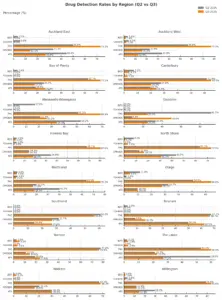
Regional hotspots: In a recent Imperans report, regional drug detections widened significantly, with methamphetamines, cannabis, and even cocaine having regional hot spots.
“Cartel activity and increased access to drugs is amplifying the complexity of workplace substance-risk management,” says chief executive Glenn Dobson, “Businesses now need to know what substance is affecting their region and undertake the right education to manage it. For example methamphetamine users present very differently to habitual users of cannabis”.
Cannabis (THC) became the dominant substance across many parts of the country and continues to stand out with a notably high rate, accounting for 71.1 percent of all positive tests in Q3.
Both Auckland East and Auckland West recorded increases of more than 20 percent from Q2 to Q3, while Manawatū-Whanganui also saw a 17 percent surge.
Opioid positivity remained stable overall but spiked sharply in certain areas such as Gisborne, which recorded a 41.7 percent increase compared to Q2. Amphetamine-type substances (ATS) displayed uneven patterns, but in certain regions such as The Lakes and Manawatū-Whanganui, detections climbed sharply in the Q2.
Cocaine, though still detected at low rates nationwide, warrants close attention, with increasing activity observed across a cluster of regions, including Tasman, Canterbury, the Lakes and the North Shore, a pattern that may reflect early-stage expansion influenced in part by organised crime networks.
Diversification: With 2026 now underway, the Imperans Report data indicates that the diversification of substance-use patterns is likely to continue. Cannabis (THC) appears set to remain at elevated levels, while opioid positivity shows no signs of meaningful decline and will require ongoing attention.
Cocaine-related activity is a trend to watch closely. It may expand gradually in regions where early increases have already been observed, contributing to a more dynamic and less predictable risk environment.
Notably, cocaine is often perceived as a more white-collar drug, with usage showing a seasonal pattern that tends to peak over the holiday period year-end events or even on the long weekends.
Behaviour: Corporate organisations face an increased need for due diligence around workplace substance-related risk, particularly around employee behaviour in order to protect their health and safety as well as the potential impact on their company reputation.
Employers will need strategies that can adapt to evolving conditions, balancing consistent policies with the operational flexibility required to respond to emerging risks. A clearer understanding of how substance patterns differ across regions will support more effective planning, but the broader challenge for 2026 is preparing for a workplace environment in which risk profiles change more frequently and require more nuanced management.
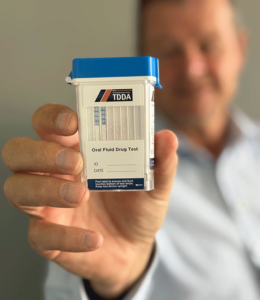
Tramadol Tester
Return-to-work: To give a specific example of actions, testing programmes such as Return-to-Work testing are recommended. Organisations are welcoming employees back into their workplaces.
When your team is returning from the holiday period, or the other long weekends New Zealand workplaces enjoy, Return-to-Work testing becomes a critical tool to ensure a safe and compliant environment. This ensures compliance and safeguards the well-being of all employees.
People relax over the holidays and sadly, some employees bring back drug use habits into the workplace. This makes Return-to-Work testing basic due diligence. The testing should be conducted fairly, transparently, and in accordance with your company’s substance policy.
Remember, new policies are more easily accepted by your employees as the year starts and regulators will look more fairly on businesses ensuring that employees returning to safety-sensitive roles are fit for duty.
Communication education: Clear communication and ongoing education in organisations will remain central pillars of effective management in 2026. In cases where there is reasonable cause to suspect substance use, employers have a responsibility to address the issue promptly and effectively. “Reasonable cause” testing allows organisations to respond to potential safety risks or violations of company policies in a fair and objective manner.
The decision to conduct reasonable cause testing must be based on observable behaviour or evidence. Managers and supervisors should be trained to approach these situations with sensitivity and professionalism. Clear guidelines outlining the process for initiating reasonable cause testing, including the involvement of testing and HR professionals, can help ensure consistency and fairness.
Company policies: Employees also should understand their company’s policies and the reasoning behind them. Reinforcing these expectations through regular refreshers, toolbox talks and practical examples can help embed safe behaviours more deeply across the workforce. A culture of transparency, competence and shared responsibility helps maintain high safety standards and morals.
A complex outlook: While national positivity rates have remained stable, Imperans data shows that workplace substance risk is becoming more complex and less predictable. In this environment, employers that ground their substance policies in data, respond to regional realities and invest in capability building will be best placed to manage risk effectively.