
Author Rachel Loo


Comprehensive data on the frequency of AI failures may be lacking but existing evidence makes clear that tragic and ill-informed incidents caused by AI are not isolated instances. The parents of 16-year-old Adam Raine, for example, filed the first known wrongful death lawsuit against OpenAI, claiming ChatGPT contributed to their son’s suicide by advising him on methods and offering to write his suicide note.

Russell King reckons there is about to be a golden opportunity to transform public transport in New Zealand, to make it the preferred choice of 10 times as many people as it is today. This article is abridged from a talk which the transport guru and editor of the Transport Leader Newsletter gave to participants at the 2025 Public Transport Australia and New Zealand conference in Auckland
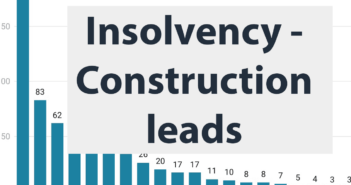
Construction continues to lead New Zealand’s insolvency statistics with 187 cases recorded in Q2 2025. Business services also saw a sharp rise in insolvencies, jumping 56 percent from Q1 to Q2. Retail trade followed with a 26 percent increase, while food and beverage, manufacturing, and property sectors saw modest declines

State of the Nation
Construction continues to lead New Zealand’s insolvency statistics with 187 cases recorded in Q2 2025. Continue →

Healthspan refers to the years of life spent in good or great health and free from serious diseases or disabilities. The McKinsey Health Institute has extensively examined the drivers that increase healthspan, with particular deep dives on the focus areas of brain health, metabolic health and women’s health. Learn more about why healthspan science is an increasingly plausible field for investment, and dive into seven shifts that could help advance the field.

Safeguards for subcontractor funds
A landmark high court judgement has reaffirmed the rules for safeguarding funds designated for subcontractors. Continue →

Simple steps to counter cyber threats
As the digital landscape expands, so does the threat of cybercrime. Continue →
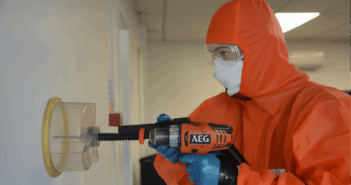
The danger we still do not see
Asbestos is often seen as a problem of the past. New Zealand banned imports of asbestos products in 2016, but the truth is more confronting says Site Safe NZ Chief Executive Brett Murray. Continue →

Asia Pacific at the forefront of AI development
As AI adoption accelerates across the Asia Pacific, organisations are taking a more strategic approach to integration, focusing on GenAI use cases that enhance operational efficiency, boost productivity and deliver personalised customer experiences. Continue →

For more than a century, Alzheimer’s disease has been defined by its tragic endpoint: the slow, heartbreaking erosion of memory, cognition and self. Scientists are redefining Alzheimer’s disease, with new tools that can measure biological signals before late-stage cognitive symptoms appear. This new understanding is leading to a generation of therapies designed to intercept the disease before it takes hold.

Ashburton mayoral candidate Jeff Ryan doorsteps the finance minister asking for road user charges to stay in the region – and gets firmly turned down. Nicola Willis says the government needs to money for new state highways. To add insult to injury he gets flak from his own townmates as well. “Nothing ventured, nothing gained,” says Ryan.

Tyre-to-tyre recycling is still very much the exception rather than the rule. However, innovative technologies do exist. The EU-funded BlackCycle project established a full circular value chain from collection to tyre production. Jean-Michel Douarre, BlackCycle Consortium Director and research programme leader on sustainable raw materials at Michelin, talked with WMW about the project’s outcome, the future of tyre recycling and how 100 percent sustainability is possible.

Forward planning for excavation
Digging into the ground might seem straightforward, but excavation work is actually one of the most dangerous parts of construction. Continue →
Hamilton Council has plans to introduce a bylaw with $20K fines for sleeping on park benches but it’s OK to sleep on the grass alongside. Funny, if it wasn’t so tragic for the homeless. Whakatane district councillors question why cemeteries, public toilets, animal control, liquor licenses and consents are not considered core services for councils in the Government (Systems Improvement) Amendment bill. Minister Simon Watts says the government is “refocusing” councils to prioritise essential services first, rather than nice-to-haves”. So much for toilets and cemeteries.

While momentum for enterprise AI is building in Australia and New Zealand, businesses are increasingly relying on external experts to address skills shortages and develop scalable AI infrastructure. Dell Tech and NVIDIA commissioned a comprehensive analysis on AI adoption by enterprises, with specific insights for Australia and New Zealand. The full report outlines how organisations can overcome adoption challenges and includes trends in enterprise AI, how to drive AI, GenAI and machine learning adoption or see reports on home pages.

Life sciences, or biology as many older readers know it, is crucial for advancement in medicine and agriculture. It is the study of living organisms, their structure, function, growth, origin, evolution, and distribution. Capital expenditures grew 13 percent a year from 2022 to 2024 as biopharma and medtech firms committed billions of dollars to expand production capacity and improve supply chain resilience. But capital alone doesn’t drive outcomes and McKinsey outlines what traditions need to be broken.

Sharing the blame and insuring the loss
Changes to liability settings for construction in the building consent system and allowing councils to share resources are designed to eliminate system blockages and speed up the delivery of new homes and infrastructure
Construction Minister Chris Penk says he plans to ease the cost burden on ratepayers for defective building work in the biggest changes to the consenting process since the Building Act came into force in 2004. Continue →

Nothing is surer than the fact the AVs are coming, like it or not. So says Russell King in an article on AVs and how cities will remain sustainable. The nightmare scenario is that we privately owned vehicles with privately owned AVs, inducing demand for more car use and creating more congestion in our cities. There is a way to coexist if we get the planning right.