
New guidance from the Financial Markets Authority (FMA), creates an opportunity for Kiwis to buy shares in residential property developments, giving them a proportionate stake in the profits once the homes are built and sold — but without the need for large deposits, personal guarantees or developer-level capital. Propopoly is first off the mark with an offer.

Dehardt van der Merwe, founder of fintech Propopoly. Photo/Supplied.
Propopoly is among the first New Zealand developers to launch a project under local FMA guidance for tokenisation which is expected to become a US$4 trillion global market by 2035 according to Deloitte and McKinsey.
The New Zealand fintech firm is using secured FMA guidance to launch a tokenized real estate platform, aiming to allow investors to participate in commercial and residential developments for as little as $500.
It has secured its first development site in Auckland, paving the way for a modest $8.9 million residential project under the model. It plans more than 1000 homes in the medium term through tokenization. The offer closes soon.
Tokenisation converts physical assets, such as real estate, into secure digital tokens that represent fractional ownership. This lowers the barriers to entry, increases liquidity in traditionally illiquid markets, and provides transparent governance through blockchain technology, says Deloitte in a report.
Apart from the FMA guidance, there’s plenty of support from global research players like McKinsey and Deloitte. “Disruptive technologies, such as asset tokenisation, could transform real estate over the next few years, predicts Deloitte.
“Tokenized real estate could not only pave the way for new markets and products but also give real estate organisations an opportunity to overcome challenges related to operational inefficiency, high administrative costs charged to investors, and limited retail participation, the report says.
Dehardt van der Merwe, founder of Propopoly, says securing the first site is critical to proving the model can open up development opportunities that would otherwise remain out of reach for retail investors.
“This moves the model into a live project environment, where land, consenting and delivery are all clearly defined,” he says.
More than 150 retail investors have already participated in the raise or begun an application, with uptake continuing to build steadily since launch.
The project
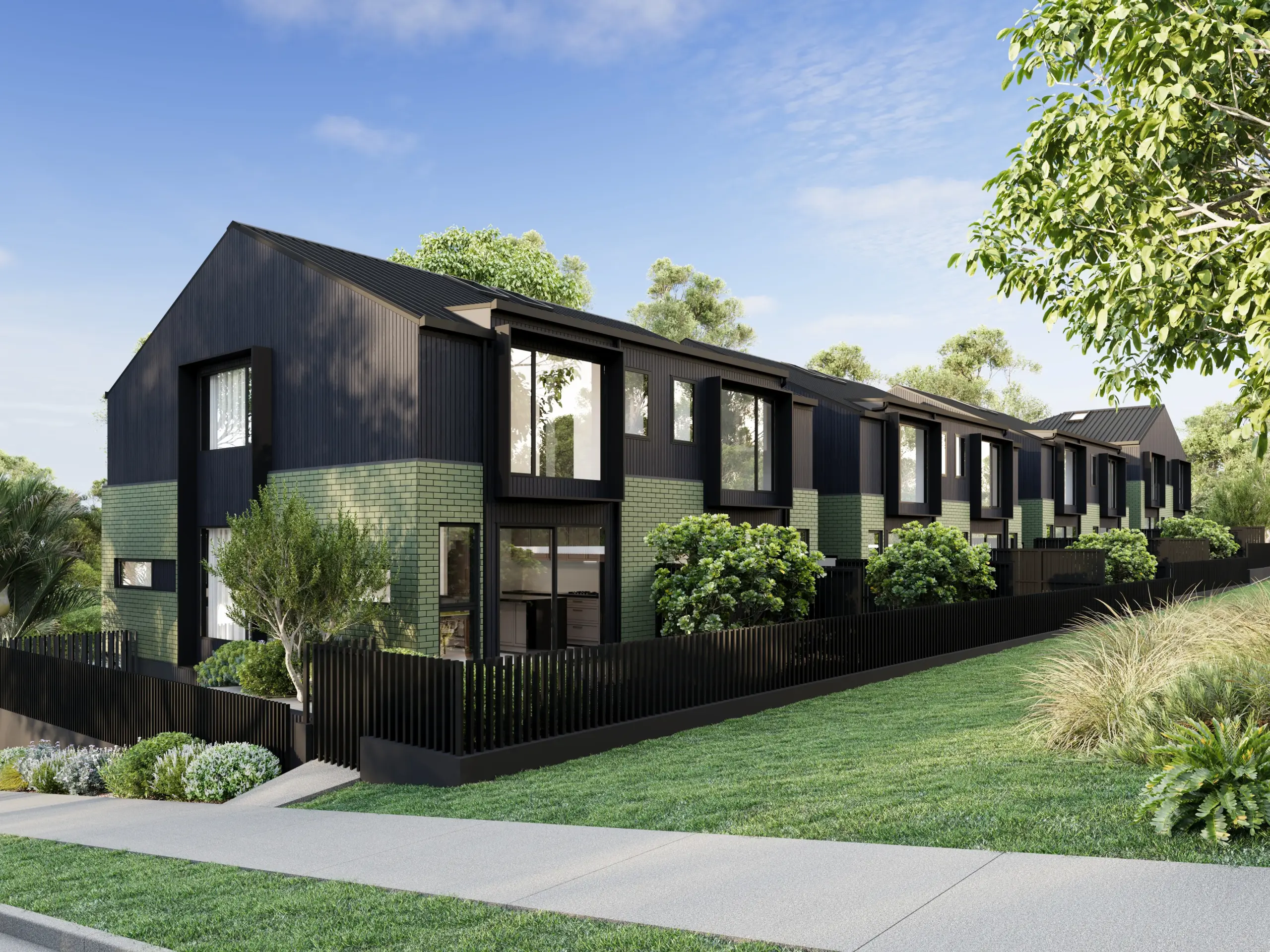
Located in Onehunga, Auckland, the eight-unit townhouse development is designed as a medium-density project targeting owner-occupiers and entry-level buyers.
“It comes at a time when access to development opportunities has become increasingly limited to a small group of well-capitalised investors,” says van der Merwe
The capital raise is targeting up to $1.64 million, with a minimum threshold of $1.27 million required to proceed. Individual investment is capped at $65,800 per investor.
Construction is expected to commence following completion of the capital raise, with the development delivered over an estimated 9-12-month period.
Digital assets
The platform will now also allow investors to participate using digital assets such as Bitcoin, alongside traditional payment methods, introducing a new pathway for digital asset holders to access real-world property development exposure.
“We are seeing increasing overlap between digital asset holders and investors looking for real-world exposure. Enabling that participation broadens the pool without changing the underlying asset,” van der Merwe says.
Under the structure, investors hold shares in a special purpose vehicle established solely to acquire and develop the site, with returns linked to the performance of the completed development. Returns remain subject to development performance and market conditions.
The company says additional sites are already under consideration as it builds a pipeline of projects, with the aim of scaling the model across multiple developments.
How it works
Investors are buying ordinary shares in Victor Lima 6 Limited (VL6) through a registered offer of equity securities. VL6 a single-purpose project company (SPV) established to acquire and develop 6 Viewland Avenue, Onehunga.
The intended commercial pathway is straightforward: VL6 acquires the site, completes the eight-unit townhouse development, sells the completed dwellings, repays project liabilities, and then returns surplus value to shareholders where available.
Investors earn
First, through the defined lifecycle of the project company. “Because VL6 has been established as a single-purpose company to acquire, develop, and sell the project, the intended pathway is that the completed dwellings are sold, project liabilities are repaid, and surplus funds are distributed to shareholders, says van der Merwe.
The Product Disclosure Statement (PDS) notes an intended first dividend date of 26 February 2027, subject to project performance, sales timing, and available cash. At the end of the project lifecycle, the company is expected to be wound up or liquidated, with any remaining surplus distributed to shareholders.
“In broad terms, this means investors may receive returns through project dividends and, on liquidation, may receive back their subscribed capital plus any further surplus available after the company’s obligations have been met,” says van der Merwe
The PDS tax section also supports this distinction: amounts distributed on liquidation up to the subscription price of the shares are generally treated as a return of capital, while amounts distributed above the subscription price are treated as dividends.
“Investors should still take their own tax advice, as treatment depends on their individual circumstances,” warns van der Merwe.
Second, investors may be able to sell their shares through the Propopoly powered platform. Technically, each share is stapled 1:1 to a digital token, and the token supports administration and transferability.
“The shares are not intended to be quoted on a licensed public market. Instead, after an initial period of approximately three months following completion of the offer, investors may be able to sell through the closed-loop, peer-to-peer platform if there is a willing buyer, says van der Merwe.
“This is not about presenting property development as risk-free. The point of the model is that the risks and potential rewards are disclosed upfront through the PDS, so investors can make an informed decision about whether they want to participate.
“Investors are not being asked to join an informal property collective or speculative crypto scheme. They are applying for ordinary shares in a specific New Zealand project company, with a disclosed property, disclosed use of funds, disclosed governance arrangements, and disclosed risks,” he says
“The aim is to give investors a transparent way to share in the outcome of a development project, rather than leaving that opportunity available only to those with developer-level capital or private networks.”
In plain English
Investors earn if the project is delivered, the homes are sold, liabilities are repaid, and there is surplus value available to return to shareholders. They may also have an earlier exit route if a secondary buyer exists on the platform, but that liquidity is not guaranteed.
An investor may ask why this is it an $8.9 million project but only raising around $1.27 million. “The $8.99 million figure is the independent “as if complete” valuation of the finished development, including GST,” says van der Merwe.
“It is not the amount being raised from investors. The offer is seeking a minimum of $1.274 million and up to $1.644 million of new equity capital. That capital is primarily being used to allow VL6 to complete the acquisition of the property, provide working capital, and support the company’s ability to move the project into delivery.
“The construction and development funding is intended to be funded separately through third-party development finance. The initial raise is best described as the minimum equity raise required before the offer proceeds and before shares are allotted.
“That equity helps satisfy the project structure and enables the project to proceed. External development finance is then expected to fund the construction phase, subject to financier requirements,” according to van der Merwe
Information panel
There are other players emerging in this market and REINZ, while not a developer, is actively investigating the use of blockchain for property development. Tokenization projects operate within FMA guidelines, with a focus on compliance with the Financial Markets Conduct Act, ensuring investors have equity in special purpose vehicles (SPVs) linked to the development.
In this model, “the $8.99 million figure is the independent valuation of the completed development. The $1.274 million minimum raise is the minimum equity capital required for the offer to proceed.
“Construction funding is expected to be provided through separate third-party development finance. The equity raised forms part of the overall funding structure that supports the project moving forward, says Propopoly.